FILM COMPARISON
Ceramic vs Carbon Window Tint: Which Is Better?
A side-by-side comparison of ceramic and carbon window tint films — heat rejection, durability, appearance, and which one is worth the money in Greenville’s climate.
⚡ Quick Answer
Ceramic window tint is the better choice for most drivers in Greenville. It blocks 20–40% more infrared heat than carbon film, has superior optical clarity, and won’t interfere with electronics. Carbon tint is a solid mid-range option that outperforms dyed film, but for South Carolina summers where cabin temperatures regularly hit 140°F+, ceramic’s heat rejection is worth the $50–$100 premium.
Understanding the Film Technologies
What exactly is ceramic window tint?
Ceramic window tint uses nano-ceramic particles embedded in the film’s construction. These microscopic ceramic elements reject infrared heat at a molecular level without darkening the film or blocking visible light. Brands like XPEL XR Plus use multi-layer ceramic technology that blocks up to 98% of infrared radiation while maintaining excellent optical clarity. The ceramic particles are non-metallic, non-conductive, and extremely stable — they won’t break down from UV exposure over decades.
What is carbon window tint made of?
Carbon window tint uses carbon particles infused into the film layers. These carbon elements provide a matte-black finish that doesn’t fade to purple over time — a significant upgrade over basic dyed films. Carbon film blocks a moderate amount of infrared heat (typically 40–60% of IR energy) and offers good UV protection. LLumar CTX is one of the most popular carbon-ceramic hybrid films, offering a balance between performance and price.
Heat Rejection: The Biggest Difference
How much cooler will ceramic tint keep my car?
In Greenville’s summer heat, the difference is noticeable. When air temperatures hit 95°F, a car parked in direct sun on Woodruff Road can reach 150°F+ inside. Ceramic tint at 35% VLT typically reduces interior temperatures by 25–40°F compared to untinted glass. Carbon tint at the same shade reduces temperatures by 15–25°F. That 10–15°F gap between the two films means your AC doesn’t have to work as hard, your leather seats aren’t burning, and your vehicle is comfortable faster after you get in.
Does shade percentage affect heat rejection?
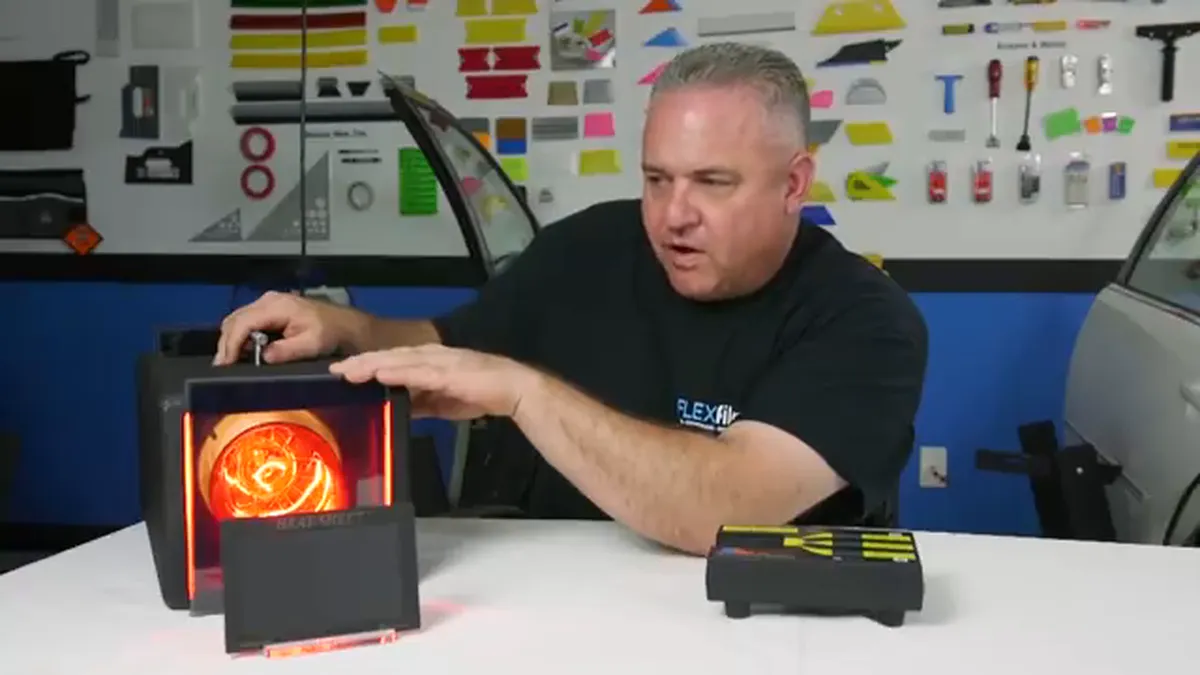
It does, but less than most people think. A ceramic film at 50% VLT (lighter shade) can reject more total heat than a carbon film at 20% VLT (much darker shade). That’s because heat rejection comes from the film technology, not from how dark it is. Visible darkness blocks some solar energy, but infrared radiation — the primary heat source — passes through dark dyed film almost unchanged. This matters because SC law (§ 56-5-5015) requires at least 27% VLT on front windows, so ceramic gives you maximum heat protection while staying legal.
Ceramic vs Carbon: Side-by-Side
CARBON TINT
Good
40–60% IR rejection. Matte finish. No purple fading. Good UV block. May interfere with some signals. $200–$350 for full car.
CERAMIC TINT
Superior
80–98% IR rejection. Crystal clarity. Zero signal interference. Lifetime color stability. $300–$500 for full car.
DYED FILM
Budget
Minimal IR rejection. Fades purple in 1–2 years. Bubbles and peels. Cheap look. $99–$150 for full car. Not recommended.
Other Factors to Consider
Will carbon tint interfere with my GPS, phone, or radar detector?
Some carbon films can cause minor signal interference, though it’s less common with modern formulations. Metallic tint films are the worst offenders for GPS and cell phone disruption. Ceramic films have zero signal interference because ceramic particles are non-conductive. If you rely on your phone for navigation on I-85 or I-385, or use a toll transponder, ceramic eliminates any risk of signal issues.
Which film looks better on the car?
Carbon tint has a distinctive matte-black appearance that some people prefer for its flat, stealth look. Ceramic tint has a more neutral, charcoal tone with better optical clarity — colors viewed through the window look more natural. At night, ceramic tint provides noticeably better visibility because the film allows more of the light spectrum through while still blocking heat. Most professional installers in Greenville will say ceramic looks more “factory” while carbon looks more “custom.”
How long does each film last?
Both ceramic and carbon films are rated for 10+ years and come with manufacturer warranties. XPEL XR Plus and 3M Ceramic IR carry lifetime warranties. LLumar CTX typically comes with a limited lifetime warranty. In practice, ceramic films tend to maintain their heat rejection performance slightly longer than carbon films because the ceramic particles are more resistant to degradation from UV exposure over time. Either film will outlast the cheap dyed alternatives by a factor of 5–10x.
What Customers Say
“I went with ceramic on my daily driver and carbon on my wife’s car to compare. Honestly, both look great, but my car is noticeably cooler when we’re both parked at Haywood Mall all afternoon. Worth the extra $80.”
— Derek M., Greenville
“They recommended XPEL ceramic for my Tesla because it wouldn’t mess with the sensors or Bluetooth. My old car had metallic tint and the GPS was always glitching. No issues at all with the ceramic.”
— Sarah T., Five Forks
“Went with LLumar CTX carbon on my Tacoma. Great look, solid heat reduction, and it was about $75 less than ceramic. For my budget it was the right call. Still miles ahead of the cheap tint I had before.”
— Brandon W., Simpsonville
Ceramic vs Carbon FAQ
Ready to Choose Your Film?
We carry XPEL, LLumar, and 3M films in both ceramic and carbon options. Get a free quote with a side-by-side sample comparison so you can see and feel the difference.