CLEAR CERAMIC WINDSHIELD PROTECTION
Windshield Tinting in Greenville, SC
Clear ceramic windshield film that blocks up to 60% of solar heat without changing visibility. Legal in South Carolina, virtually invisible, and the single most impactful window you can tint on any vehicle.
⚡ Quick Answer
Windshield tinting in Greenville costs $149–$299 depending on vehicle size and film grade. We use clear ceramic film at 70%+ VLT — fully legal in South Carolina and virtually invisible. The windshield is the largest piece of glass on your car and accounts for roughly 30–35% of total solar heat gain. A single-window upgrade that makes a massive difference, installed in 60–90 minutes.
Why Windshield Tint Is the Most Underrated Upgrade
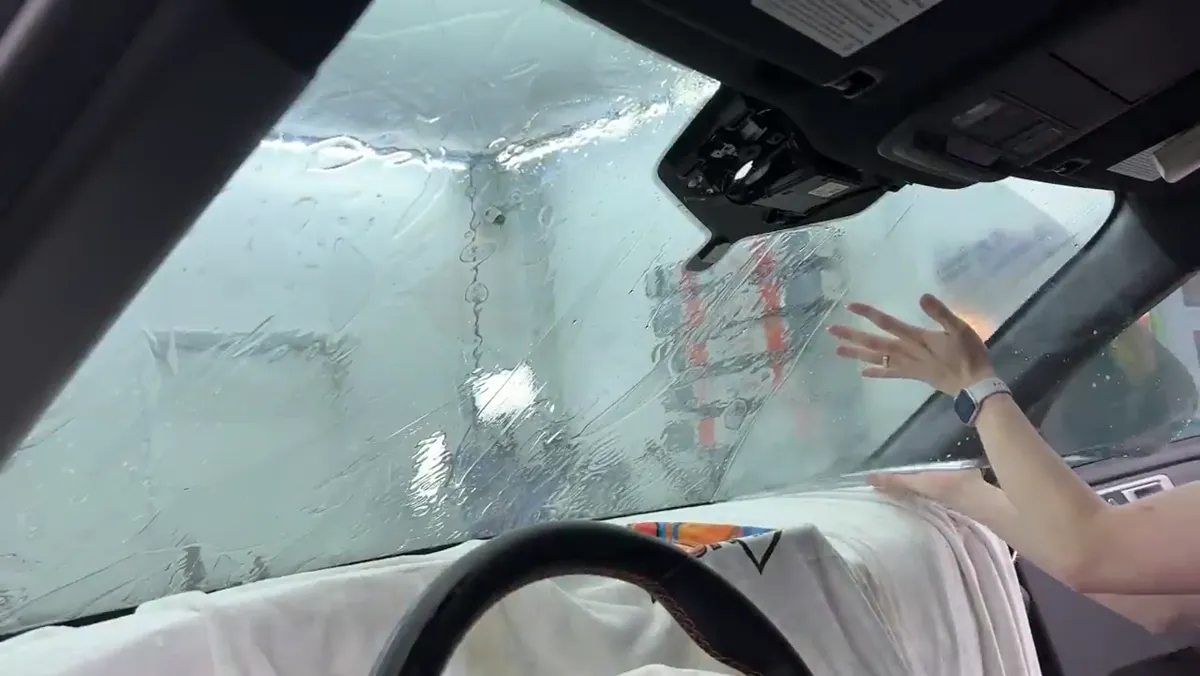
Most people tint their side and rear windows but skip the windshield. That’s leaving 30–35% of your vehicle’s solar heat gain completely unaddressed. The windshield is the largest, most vertical piece of glass on your car — it catches direct morning and afternoon sun on every commute. Ceramic windshield film is the single highest-ROI tint upgrade you can make.
Is windshield tinting legal in South Carolina?
Yes. South Carolina law (§ 56-5-5015) allows windshield tint as long as it has at least 27% visible light transmission (VLT). The clear ceramic films we use are 70–80% VLT — well above the legal minimum. They’re virtually invisible from inside and outside the vehicle. Law enforcement won’t give these films a second look because they don’t appear tinted. You get the heat rejection benefits with zero legal risk.
Can you actually feel the difference with windshield tint?
This is the most common question we get — and the answer is an emphatic yes. Drivers consistently report that their steering wheel is no longer burning hot, the sun on their arms and face feels noticeably softer, and their AC reaches the set temperature faster. During Greenville summers, the difference is immediate and dramatic. Many customers come back and say they wish they’d done it years ago. It’s especially noticeable on morning commutes driving east on I-85 or afternoon drives west on Woodruff Road.
Will windshield tint affect my visibility at night?
At 70–80% VLT, the film allows the vast majority of visible light through. Most drivers can’t tell it’s there during daytime and notice only a very slight warmth to the glass at night. It actually helps with nighttime driving by reducing headlight glare from oncoming traffic. If you’re concerned, we can apply a sample and let you test it before committing.
What about my dash cam, rain sensor, and ADAS systems?
Ceramic windshield film is compatible with all modern windshield electronics. We cut precise clearance areas around rain sensors, ADAS cameras (lane departure, collision avoidance), and any other sensor clusters behind the rearview mirror. Dash cams work perfectly through ceramic film since it doesn’t affect visible light transmission. If your vehicle has a heads-up display (HUD), we use a film specifically designed for HUD-equipped vehicles to prevent double images.
Windshield Tint Pricing
Sedan / Coupe
$149
Clear ceramic film
70%+ VLT • Fully legal
~60 minutes
SUV / Truck
$199
Clear ceramic film
XPEL XR Plus • ~75 min
Sensor cutouts included
Premium IR Reject
$299
3M Ceramic IR series
Maximum heat rejection
~90 minutes
The Science Behind Ceramic Windshield Film
Solar energy hits your windshield in three forms: visible light (what you see through), ultraviolet (UV, what causes sunburn and interior fading), and infrared (IR, what you feel as heat). Standard glass blocks most UV but allows nearly all IR through. Ceramic windshield film uses nano-ceramic particles to selectively block IR wavelengths while allowing visible light to pass. The result: 99% UV rejection and up to 60% IR rejection with no meaningful change to visibility.
What Customers Say About Windshield Tint
“I was skeptical about windshield tint — couldn’t believe a clear film would make a difference. But driving home on I-385 that first afternoon, the sun on my face felt completely different. My steering wheel wasn’t scalding hot for the first time all summer. Game changer.”
— Amanda P., Greenville
“Got the windshield done on my BMW X5. They worked around my heads-up display perfectly — no ghosting, no issues. The heat rejection is legit. My AC gets cold faster and my face doesn’t feel like I’m sitting under a heat lamp.”
— Chris W., Greer
“I drive east every morning for work and the sun was blinding. The ceramic windshield film cuts the glare significantly without making things dark. My dash cam still works fine and my rain sensor still triggers correctly. Wish I’d done this sooner.”
— Nathan D., Mauldin
Windshield Tinting FAQ
Add Windshield Protection Today
The single best tint upgrade you can make. 60–90 minutes, fully legal, and you’ll feel the difference immediately.